
Total Ankle Replacement Surgery
Restore mobility and relieve chronic ankle pain with modern joint replacement options tailored to your needs.
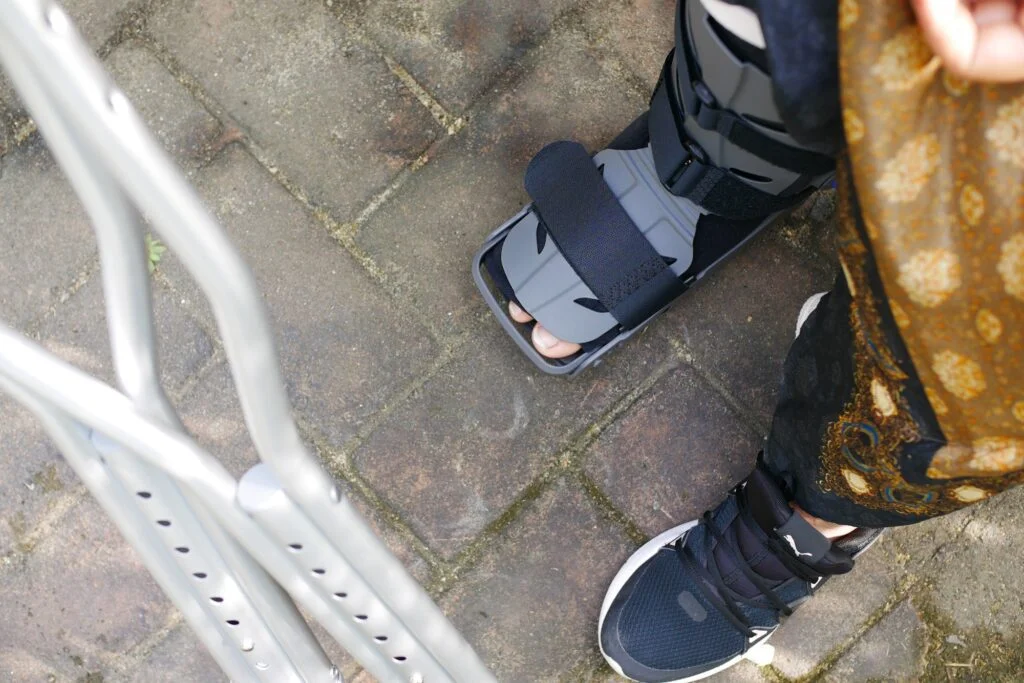
What You Need To Know
Understanding when an artificial joint can restore mobility to your ankle or big toe.
Ankle and Big Toe Joint Replacement
Sometimes joints are injured or wear out to the point when an artificial joint is needed to restore mobility. When conservative care no longer controls pain and stiffness, joint replacement can be a meaningful option for both the ankle and the big toe.
Ankles are a prime spot for arthritis. Ankles are more likely to develop post-traumatic arthritis than osteoarthritis. For many Baby Boomers, the trauma was an ankle fracture or a bad sprain that may have happened in their teens or twenties. Years later, that old injury can lead to joint deterioration, chronic pain, and limited motion.
Baby Boomers are also most likely to develop osteoarthritis in their big toe joint. During walking, the big toe absorbs forces equal to nearly twice a person’s body weight. It plays an important role in stooping and standing. Some boomers start to develop big toe stiffness, a condition called hallux limitus, in their forties.
If you are dealing with persistent ankle or big toe pain, stiffness that limits daily activity, or a joint that has not responded to other treatments, it may be time for an evaluation. Our team will review your history, examine the joint, and help you understand whether replacement, fusion, or another approach is the right fit for your situation.
Treatment Options and What to Expect
Better surgical procedures now offer improved pain relief and joint movement to Boomers with early stage arthritis at the big toe. Patients with advanced and severe arthritis may need to have the joint fused or replaced. Stronger screws and hardware are helping fusions last longer while slashing recovery times, and a new generation of big toe joint replacements shows promise.
For the ankle, innovative surgical techniques allow foot and ankle surgeons to transplant small plugs of cartilage from one part of the ankle to another in some patients, slowing joint deterioration. This can be an option earlier in the disease process, before a full replacement becomes necessary.
Ankle replacements, however, are not as durable as hip and knee replacements. The ankle is a more challenging joint to replace. It is smaller and moves in multiple directions. Even so, better and promising ankle implants are hitting the market, giving patients more options than were available just a few years ago.
Choosing between joint replacement, fusion, and cartilage transplantation depends on the severity of the arthritis, your activity level, and the condition of the surrounding bone and soft tissue. Our surgeons will walk you through the trade-offs so you can make an informed decision and know what recovery will look like from your first visit through your return to daily activities.
Locations Offering Ankle Replacement
Find a Foot Care Center location near you for advanced joint replacement care.


Don’t let ankle or big toe pain keep you from the activities you love.
Schedule a consultation today and we’ll help you find the right path forward.