
Plantar Fasciitis and Heel Pain Care
Relief from stubborn heel pain with expert diagnosis and personalized treatment plans that restore comfort and mobility.
What You Need To Know
Understanding heel pain, its causes, and how the Foot Care Center can help.
Understanding Plantar Fasciitis and Heel Pain
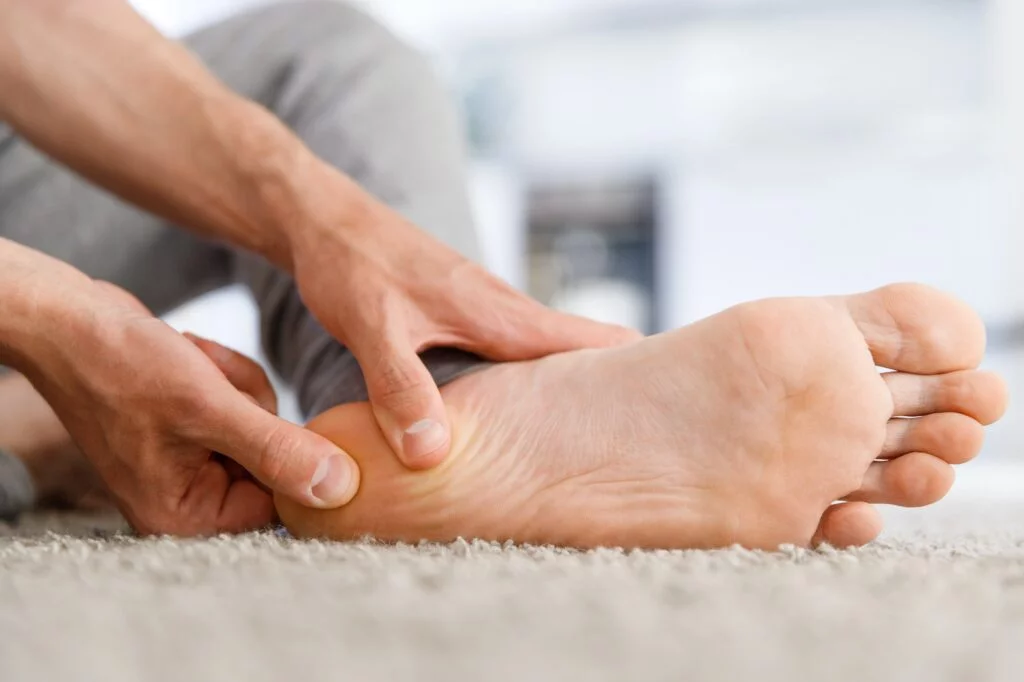
Plantar fasciitis is one of the most common causes of heel pain, resulting from inflammation of the plantar fascia, the thick band of tissue that runs along the bottom of the foot. It occurs when the plantar fascia becomes irritated or inflamed, usually due to repetitive stress, and often causes sharp pain in the heel, particularly with the first steps in the morning or after periods of rest.
Heel spurs are bony growths that develop on the underside of the heel bone and can cause significant pain and discomfort. These calcium deposits form where the plantar fascia attaches and are commonly associated with chronic inflammation or repetitive stress. While some heel spurs may be painless, many can cause sharp pain during walking or standing.
Common symptoms include sharp heel pain with the first steps in the morning, pain that worsens after prolonged standing or activity, tenderness along the bottom of the heel or arch, swelling or inflammation in the heel area, and discomfort when climbing stairs or walking on hard surfaces.
Risk factors include repetitive impact from running, walking, or prolonged standing, improper footwear lacking support, high arches or flat feet, obesity, aging, and sudden increases in activity intensity. If heel pain persists for more than a few weeks or interferes with daily activities, it is time to schedule an evaluation at the Foot Care Center, where our podiatrists provide accurate diagnosis and personalized treatment.
Treatment, Prevention, and Long-Term Care
Treatment for plantar fasciitis and heel pain begins with conservative, non-surgical approaches. These include rest and activity modification to reduce stress on the plantar fascia, stretching exercises for the foot and calf muscles, supportive footwear and custom orthotics, heel pads or night splints, anti-inflammatory medications to reduce pain and swelling, and physical therapy to strengthen foot muscles and improve mechanics.
For heel spurs, additional options may include corticosteroid injections for severe inflammation and heel pads to redistribute pressure. Surgery is considered only after conservative treatments fail and may include plantar fascia release, removal of heel spurs, or minimally invasive techniques to reduce recovery time.
Without treatment, heel pain can lead to chronic discomfort affecting daily activities, altered gait that may cause knee, hip, or back pain, development of secondary foot problems, and reduced mobility. Persistent inflammation and thickened skin or callus formation under the heel are also possible.
Prevention plays an important role in long-term foot health. Wear supportive, cushioned footwear, use orthotics to correct foot mechanics, maintain a healthy weight to reduce stress on the feet, stretch the calf muscles and plantar fascia regularly, and gradually increase activity levels to prevent overuse injuries. With early intervention and expert care at the Foot Care Center, pain can be managed and mobility restored so you can return to the activities you enjoy.
Locations Offering Heel Pain Care
Find a Foot Care Center location near you for convenient, expert heel pain treatment.

Don’t let heel pain slow you down, schedule your visit today
We’re here to help you get back on your feet with care that fits your life.